
Google has announced a broader rollout of its Android Parental Controls features, extending support to all Android devices that receive the upcoming Android 17 update. The company is also increasing its U.S. digital well-being fund to more than $50 million as part of its wider effort to support healthier technology use among children and teenagers.
The announcement comes as schools break for summer in many regions, a period when families often face greater challenges managing children’s screen time. By bringing parental controls directly into Android settings across a wider range of devices, Google aims to make family safety tools easier to access and use without requiring parents to navigate multiple apps or menus.
Key Takeaways
- Android Parental Controls will expand to all devices that update to Android 17.
- The feature was previously introduced on Pixel devices.
- Parents will be able to manage screen time, app access, content ratings, and device downtime from Android settings.
- Controls are protected by a parent-configured PIN.
- Google is increasing its U.S. digital well-being fund to more than $50 million to support initiatives focused on healthy technology use and reducing social isolation among young people.
Android Parental Controls Coming to More Devices
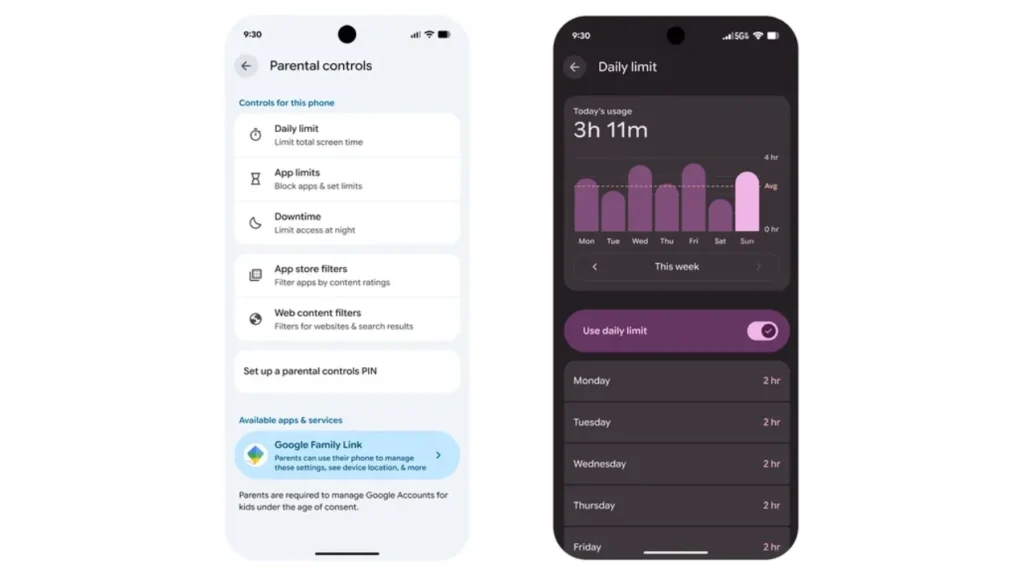
Google said Android Parental Controls will no longer be limited to Pixel smartphones. Once manufacturers begin rolling out Android 17, the feature will become available across eligible Android devices.
The controls are integrated directly into Android’s settings menu, creating a centralized location for managing family-focused device restrictions. This approach combines built-in Android controls with access to Google Family Link, reducing the need for parents to switch between different management tools.
According to Google, parents will be able to:
- Set daily screen-time limits.
- Create downtime schedules that automatically lock devices during designated periods, such as bedtime.
- Restrict downloadable content on Google Play through age-based content ratings.
- Limit usage of specific applications or block apps entirely.
From a usability perspective, placing these tools inside Android settings could make them more visible to parents who may not be aware of dedicated family management apps. Centralized controls also reduce setup complexity, which is often a barrier to broader adoption of parental supervision features.
Family Link Remains Part of the Experience
While the new controls operate at the device level, Google is continuing to position Google Family Link as the broader family management platform.
Android Parental Controls provide a direct route for setting up Family Link on a parent’s phone. Through Family Link, families can access additional features, including:
- School time management tools.
- Google Play purchase approvals.
- Location alerts.
- Additional parental supervision capabilities.
This structure suggests Google is treating Android Parental Controls as an entry point for everyday device management, while Family Link continues to handle more advanced family oversight functions.
Why Google’s Approach Focuses on Device-Level Controls
One notable aspect of the announcement is Google’s emphasis on controls built directly into the operating system.
For parents, device-level controls can be more difficult for children to bypass compared with standalone applications. Features such as PIN-protected settings, scheduled downtime, and app restrictions work at the system level, helping ensure that limits remain in place regardless of which apps are installed.
The expansion also means Android users across different brands may gain access to a more consistent parental control experience, assuming their devices receive Android 17.
Beyond Screen Time: Google’s Growing Digital Wellbeing Investment
Alongside the Android announcement, Google revealed that it is increasing its U.S. digital well-being fund to more than $50 million.
The company said the additional funding will support programs and interventions aimed at encouraging healthier technology interactions among children and teenagers. Google also highlighted efforts intended to address social isolation, an issue that has become a growing focus in discussions about youth well-being and digital engagement.
While Google did not provide detailed information about specific programs in this announcement, the funding increase signals that the company is framing digital well-being as a broader issue than screen-time management alone.
What This Means for Families Using Android
The expansion could be particularly relevant for households that use Android devices from multiple manufacturers rather than Google’s Pixel lineup.
Parents who previously lacked access to Google’s built-in parental controls may soon gain easier access to tools that help manage daily device use, app access, and bedtime routines. The move also reinforces a broader industry trend toward embedding family safety features directly into operating systems rather than relying solely on third-party solutions.
For families already using Family Link, the update may simplify setup and ongoing management by bringing key controls closer to the operating system itself.
What to Watch as Android 17 Rolls Out
The availability of Android Parental Controls will depend on Android 17 reaching individual devices. Google has confirmed the feature will expand to Android devices that receive the update, but rollout timing will ultimately vary by device manufacturer and model.
Additional details may emerge as Android 17 deployment begins and manufacturers confirm which devices will receive the update and associated parental control features.
Conclusion
Google’s latest family safety update focuses on making parental controls more accessible across the Android ecosystem. By extending Android Parental Controls beyond Pixel devices and integrating them directly into system settings, the company is attempting to simplify how parents manage screen time, app access, and digital habits. Combined with an expanded digital well-being fund, the announcement reflects Google’s continued emphasis on both technical controls and broader well-being initiatives for children and teens.
Source: Google Blog
